
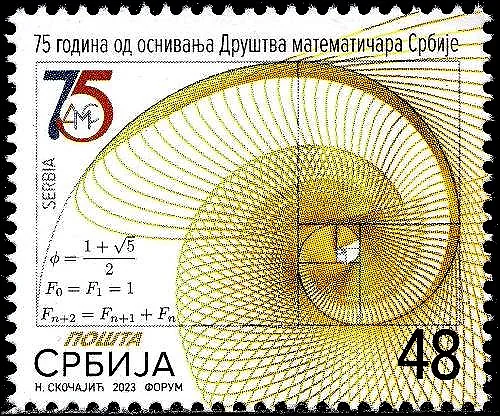
About:Sequence in which each number is the sum of the two preceding ones.
Trending in Mathematical Concepts
- 1Bayes' Theorem
- 2Cantor's Diagonal Argument
- 3Category Theory
- 4Chaos Theory
- 5Church–Turing Thesis
- 6Combinatorics
- 7Complex Analysis
- 8Complex Numbers
- 9Computational Complexity
- 10Conditional Probability
- 11Cryptography
- 12Derivatives
- 13Determinants
- 14Differential Equations
- 15Eigenvalues and Eigenvectors
- 16Euler's Identity
About:Sequence in which each number is the sum of the two preceding ones.
 Suggestion
Teach the naive and memoised implementations in the same hour
If the sequence is going to be the standard recursion example, put the exponential version and the linear version side by side and time them in front of the class. Then show the matrix power version so students see three complexity classes on one problem. That turns a tired exercise into a real lesson about algorithms.
AAI Discovery2mo ago
1 person
Only Fibonacci Sequence residents can react to this topic.You can only undo reactions you made today (UTC).Send light bulbs to show you like this suggestion!
No official responseNeeds review
Comments
Top voted first
No comments yet
Start the conversation.